


NIST digital identity guidelines define three assurance levels for federated identities: IAL, AAL and FAL. Each of these levels indicates the strength and correlation of claimed digital identities to real world identity; HYPR supports all three assurance levels including in-person verification for level IAL3.
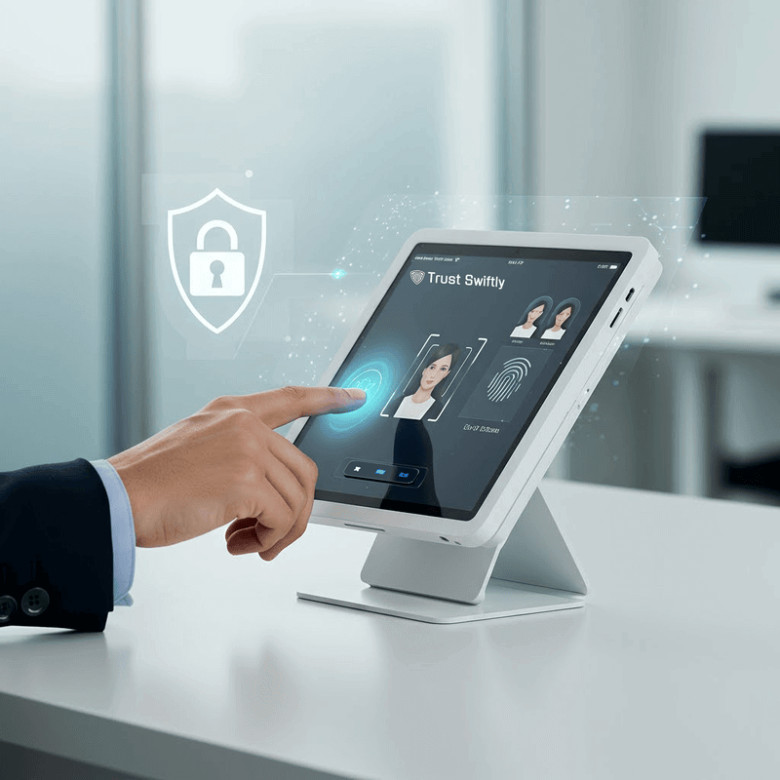
TrustSwiftly comprehensive identity verification solution combines chat, video, facial recognition with liveness detection and document authentication to meet IAL3 standards, creating an ideal blend for business and security goals while decreasing cyber liability insurance premiums and password reset requests.
IAL3 compliant solution
IAL3 is the highest level of NIST digital identity guidelines and requires extensive identity verification procedures, including physical and biometric evidence that confirms real world existence of claimed identities as well as binding an authenticator in order to safeguard against stand-in fraud.
TrustSwiftly helps organizations meet NIST 800-63A IAL3 standards by using multiple verification methods, including chat, video, facial recognition with liveness detection and document authentication. This process reduces cyber liability insurance premiums as well as operational costs by decreasing password resets.
Another way of meeting the requirements of IAL3 could be using a kiosk which is monitored in real-time by a CSP agent, providing businesses with limited resources with an option similar to how security guards review identification before admitting visitors into certain offices.
Document authentication
Document authentication is an integral component of combatting fraud, upholding security and building trust. Authentication uses physical and digital security features such as watermarks, special inks and security threads to verify documents' authenticity; authentication methods range from visual inspection to sophisticated electronic verification techniques involving holograms, watermarks or special inks for electronic documents that use them; digital documents can even be verified using digital signatures.
NIST IAL3 verification standard takes a more proactive and risk-based approach to verification than previous standards, calling on proofing agents to conduct identity-proofing sessions similar to what security guards review for entry to certain offices. Furthermore, stringent checks such as direct observation during these identity-proofing sessions, document validation against authoritative sources and biometric comparison with claimed digital identities will help prevent impersonation and fraud.
Biometric verification
Biometric verification uses unique physical traits like facial features, voice tones or iris patterns to verify identity. Since biometrics can't easily be stolen or faked, they provide an effective defense against cyber attacks and safeguard user accounts.
The IAL3 identity proofing from NIST requires in-person verification and is considered one of the highest identity assurance levels available. Furthermore, extensive verification processes help prevent attacks like impersonation attacks as well as serious security threats such as ID theft.
These steps include direct observation during an identity-proofing session, document validation against authoritative sources and biometric comparison with claimed digital identities. Furthermore, this process requires high pixel count images with secure connections in order to decrease spoofing threats and offer transparent complaint and enquiry systems for users who experience any issues with the system.
High pixel count
The National Institute of Standards and Technology publishes a wide variety of standards that cover everything from plumbing pressure-loss measurements to chemical element viscosities. Standard practices serve as benchmarks for business and scientific disciplines, mitigating risks related to cybersecurity threats, privacy issues and hardware configuration. These standards are published in various forms, such as special publications that provide guidelines for their implementation. TrustSwiftly provides an IAL3 compliant solution that meets these guidelines - from document authentication and biometric verification, high pixel count for reduced spoofing, secure connections against malware threats, to capture of multiple modalities. TrustSwiftly's verification solution offers everything needed for compliance.
Secure connections
The National Institute of Standards and Technology (NIST) publishes standards that serve as benchmarks in numerous business, scientific, and technological disciplines - from plumbing pressure-loss measurements to chemical element viscosities. Although best known for its work in information technology, NIST has long been considered a leader in physical sciences as well as other areas.
Secure connections give the appearance that they protect computers from attack, but they may actually act as gateways for malware to enter. While standard solutions protect against threats present on standard network connections, they're unable to counter threats present on secure ones.
For IAL3 compliant solution, you must implement a high-assurance identity proofing process, including direct observation during verification sessions, document validation against authoritative sources and biometric comparison with digital identities claimed by individuals.